Ratified on July 9th 1868, the 14th Amendment has become one of the most important Amendments due to its influence on the development of the US. The Amendment has had a large role in the development of equality for African Americans in America. Some of the most important civil rights events have been made under the 14th Amendment.
Following the 13th Amendment, which abolished slavery in the newly reformed United States, there needed to be an additional amendment that focused on establishing and protecting the rights of the new citizens. Different plans and proposals led up to the 14th Amendment, spanning from solidifying rights for African Americans to issues still present after the Civil War.
One of these was the Civil Rights Act of 1866, which stated that all people born in the United States were entitled to be citizens no matter no matter race or color. President Johnson vetoed the bill, but Congress overrode his veto. This is the first time in United States History that Congress overrode a presidential veto.

The different legislative proposals that were being pushed at the time all came together through Representative Thaddeus Stevens. The proposal written by Stevens included some of the most pertinent issues at hand, the main parts being civil rights for African Americans, ceasing existing Confederate debt, and baring former Confederate officials from running for office. This plan was submitted to the states for ratification in June of 1866, and was passed on July 9th, 1868 the three fifths majority requirement was completed.
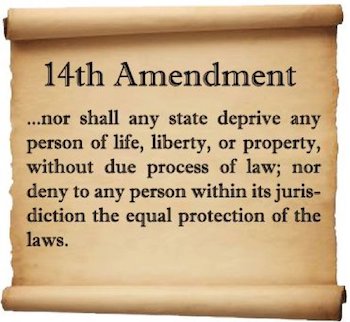
The primary objective of the amendment was to solidify civil rights and freedoms in the United States Constitution. Along with introducing new laws, the amendment built upon the 5th Amendment. While the 5th Amendment established Due Process, the 14th Amendment extended the coverage of due process to states as well. This is the first Amendment that limits state action.
The amendment includes 3 main clauses: Equal Protection, Due Process, and Privileges or Immunities. This reversed previous decisions and laws, such as the Dred Scott Decision, that forbid slaves and even freedmen from becoming US citizens.

In order to ensure political change in the former confederate states, the 14th Amendment forced the removal and re-election of all Confederate officials. Section 4 of the Amendment states that any debt in aid to the confederacy was to be forgotten and any losses claimed from the release of slaves would be illegal. The final section of the Amendment states that Congress has the power to enforce the provisions made in the Amendment, although this is in other Amendments.
Source Used: https://www.history.com/topics/black-history/fourteenth-amendment


No comments:
Post a Comment